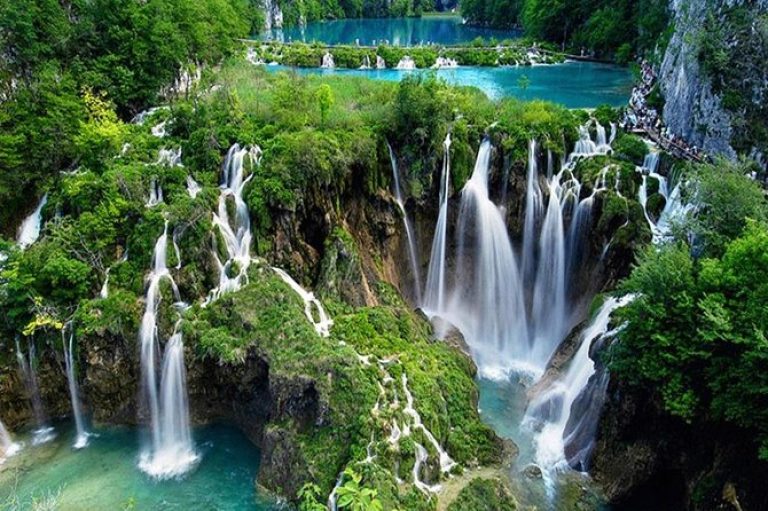
If you only have one day, the choice is simple. Pick Plitvice for the bigger, more dramatic park, especially from Zagreb or Zadar. Pick Krka when you’re based near Split and want an easier, shorter visit. That’s the Krka vs Plitvice decision in one sentence. Both ban swimming now. So pick on scenery and logistics, not on jumping in the water.
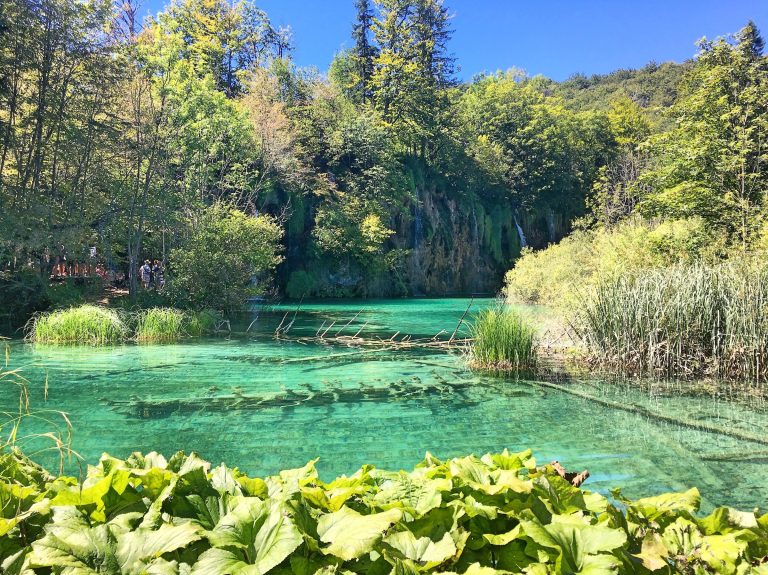
Plitvice Lakes is Croatia’s oldest and largest national park. It has 16 terraced lakes and more than 90 waterfalls, spread across nearly 297 km². Krka is smaller at about 109 km². It’s built around one headline attraction. That’s the Skradinski Buk cascade with its 17 travertine steps. Plitvice is a half-day of walking through layered turquoise lakes. Krka is a tighter loop you can finish in two to three hours.
Neither park lets you swim anymore. Krka’s swim ban at Skradinski Buk started on 1 January 2021. Plitvice has banned swimming since 2006. Plenty of older blog posts still tell you to pack a swimsuit for Krka. They’re wrong. The rest of this guide explains exactly what’s true in 2026.
Quick verdict: Krka or Plitvice?
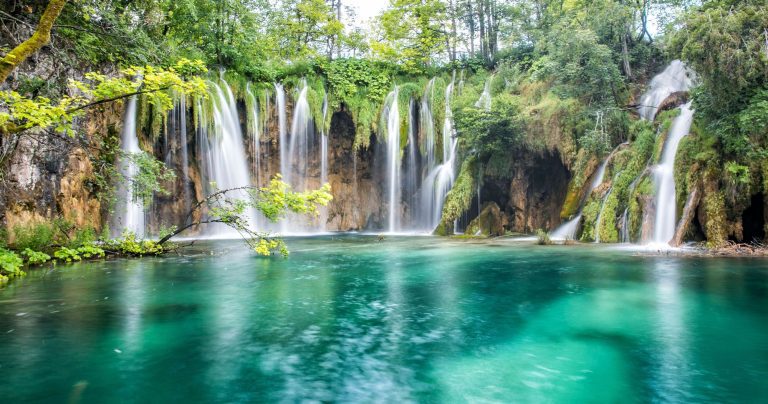
Plitvice wins on scale and on the “wow” factor. The boardwalks weave directly between the lakes and waterfalls. You can hear the water on both sides. The colour of the water is hard to believe. It needs a full day. It rewards one too.
Krka wins on convenience. It’s an easy day trip from Split or Zadar. The main waterfall area is compact. You can pair it with the riverside town of Skradin. If your trip is coast-heavy and time-tight, Krka is the practical answer.
If you can only do one and you’re already on the Dalmatian coast, most travellers do Krka. If you’re routing through inland Croatia or staying in Zagreb, do Plitvice.
The differences that actually matter
Plitvice is a landscape. You spend hours moving through it. You cross a big lake by electric boat. You ride a panoramic shuttle between zones. You walk wooden boardwalks that put you inches from the water. The scale is the point.
Krka is a single showpiece. Skradinski Buk is one wide, multi-tier cascade. You loop around it on a roughly two-kilometre boardwalk and trail. You see the best of it quickly. That’s either efficient or underwhelming depending on what you wanted.
Plitvice feels wilder and more forest-like. Krka feels more like a riverside park with a famous waterfall at its centre. Both get hot and exposed in July and August. But Plitvice’s tree cover gives you more shade.
Can you swim in Krka or Plitvice? (the part most guides get wrong)
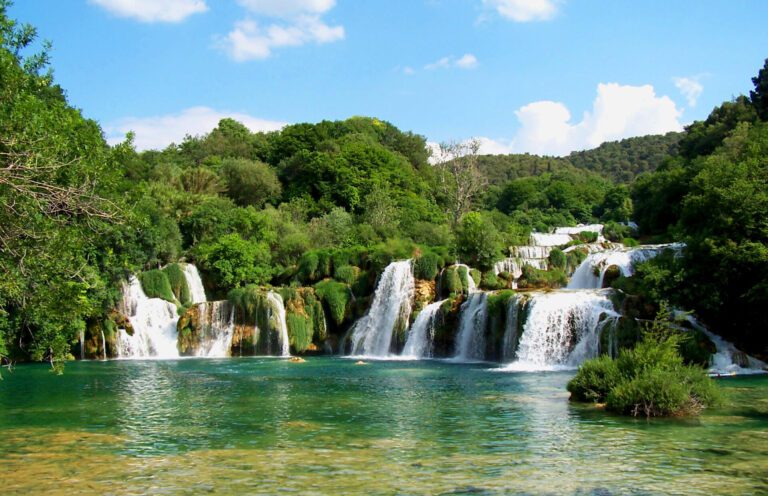
No, you cannot swim at Skradinski Buk, the main waterfall in Krka. You cannot swim anywhere in Plitvice either. This is the single most outdated claim online about these parks. Read this section carefully before you plan around an old article.
Krka banned swimming at Skradinski Buk on 1 January 2021. The reason is the travertine, the living rock that builds the waterfalls. Foot traffic and sunscreen damage the deposition process. So the park closed the famous swimming pool below the falls to protect it.
There is one narrow exception inside Krka. Swimming is still allowed at Roški Slap, a different and quieter waterfall further up the river. It runs roughly from 1 June to 30 September, at your own risk and subject to water levels. Almost no day-tripper reaches it. Nearly everyone enters via Skradin and heads straight to Skradinski Buk, where swimming is firmly off-limits.
Plitvice has never been a swimming park in modern memory. The ban has been in force since 2006. It’s strictly enforced to protect the same kind of fragile tufa formations. Maybe you’ve seen a photo of someone swimming under a Croatian waterfall. It was taken at Krka before 2021. It can’t be recreated today.
Which is easier as a day trip from Split, Zadar, or Zagreb?
From Split, Krka is the clear winner. The park sits a little over an hour away by car or bus. Plitvice is roughly 240 km and a 2.5 to 3 hour drive each way. That’s five to six hours of driving for Plitvice from Split. It eats your whole day.
From Zadar, both are doable. But Krka is still easier. Krka is just over an hour away. Plitvice is around 120 km and roughly a 1.5 hour drive. Zadar is the one base where doing Plitvice as a relaxed day trip genuinely works.
From Zagreb, Plitvice is the obvious choice. It’s about 130 km and a 2 hour drive with direct buses. It’s one of the most popular day trips out of the capital. Krka from Zagreb is too far to justify for a single day.
The easiest way to skip the logistics from the coast is an organised tour. A Krka day trip from Split handles the drive and park entry in one booking. Set on the bigger park? A Plitvice day trip from Split is the lower-stress way to manage the longer distance.
You can also rent a car with Discover Cars and drive yourself if you’d rather set your own pace. That’s the best way to arrive early before the tour buses land.
Ticket prices and opening seasons in 2026
Both parks cost the same in peak summer. Both stay open year-round. Shoulder-season pricing is where they differ. Always check the official park sites before you go. Prices shift with the season.
Krka’s adult ticket is €40 in June, July, August, and September. It drops to €30 if you enter after 15:00. April, May, and October cost €20. Deep winter (January–February) falls to around €6.64. The Krka ticket includes the boat from Skradin to Skradinski Buk and the bus from Lozovac.
Plitvice’s adult ticket is also €40 in peak summer (1 June–30 September, until 16:00 in June–August or 15:00 in September). A cheaper late-entry rate sits at €25. The April, May, and October rate is €23. Plitvice ticket prices include the panoramic shuttle train and the electric boat across Lake Kozjak.
Children under 7 enter free at both parks. In summer, book Plitvice tickets in advance for a timed slot. Entries are capped. Same-day tickets can sell out. If you want a base near the park, search hotels near Plitvice on Booking.com to stay close and start early.
Krka vs Plitvice: side-by-side comparison
| Feature | Krka National Park | Plitvice Lakes National Park |
|---|---|---|
| Park size | ~109 km² | ~297 km² (Croatia’s largest) |
| Main attraction | Skradinski Buk (17 travertine cascades) | 16 lakes + 90+ waterfalls |
| Swimming allowed | No at Skradinski Buk (banned 2021); only at Roški Slap, Jun–Sep | No (banned 2006) |
| Peak adult ticket (2026) | €40 (Jun–Sep) | €40 (Jun–Sep) |
| Shoulder ticket | €20 (Apr, May, Oct) | €23 (Apr, May, Oct) |
| Nearest big city | Split / Zadar (~1 hr) | Zadar (~1.5 hr), Zagreb (~2 hr) |
| Time needed | 2–3 hours | 5–6 hours |
| Best for | Short trips, Split-based travellers | Bucket-list scenery, full-day visits |
How much time does each park need?
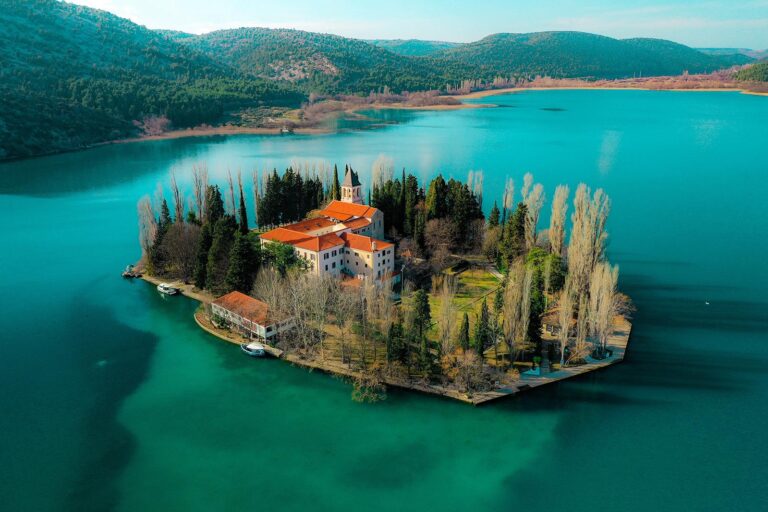
Krka’s main loop takes 2 to 3 hours. You can see Skradinski Buk, walk the boardwalk circuit, and visit Skradin comfortably in half a day. That’s why it slots so neatly into a coastal itinerary.
Plitvice needs 5 to 6 hours minimum to do it justice. Many visitors spend the full day. The popular routes combine boardwalk walking with the boat ride and the shuttle. Rushing it means skipping either the Upper or Lower Lakes.
If you try to “quick-visit” Plitvice in two hours, you’ll see one section and leave frustrated. Krka tolerates a short visit. Plitvice punishes one.
Crowds and the best time of day
Both parks are busiest from late June through August. Both get packed by mid-morning when tour buses arrive. The boardwalks at Plitvice are narrow and one-directional in places. So peak-hour bottlenecks are real and slow.
Arrive at opening, around 7:00 to 8:00 in summer. Or use the late-entry ticket after 15:00–16:00 when the day crowds thin and the light softens. Early is better for photos and cooler temperatures.
Honest warning about summer. Dalmatian heat in July and August is intense. Krka’s open boardwalks offer little shade. Bring water and a hat. Don’t plan a midday visit if you can avoid it. Plitvice is cooler thanks to its forest. But the crowds there are the bigger drawback.
Which is best for families, first-timers, and photographers?
For families with young kids or anyone short on time, Krka is gentler. Shorter walking, a clear single highlight, and an easy day trip from the coast make it lower effort. The swim ban removes what used to be the big family draw. Set expectations there.
For first-timers who want the definitive Croatian national park experience, Plitvice is the one to see. It’s the image most people have in their head when they picture Croatia’s lakes and waterfalls. It delivers at scale.
For photographers, Plitvice has more compositions: layered lakes, long waterfall curtains, boardwalks leading the eye. Krka gives you one strong wide cascade and the riverboat approach. Both reward early light before the crowds clutter the frame.
The recommendation
Coast-based and time-limited? Do Krka, ideally early, and add Skradin for lunch. It’s the efficient, lower-stress choice from Split. It’s easy from Zadar too.
Want the park people travel to Croatia specifically to see, and you have a full day? Do Plitvice. Book a timed entry in advance. Treat it as the day’s main event rather than a stop. If you can only pick one and scenery matters most to you, Plitvice is the bigger payoff.
Frequently Asked Questions
Krka or Plitvice, which is better?
Plitvice is the larger and more dramatic park (16 lakes, 90+ waterfalls). It’s best if you have a full day and start from Zagreb or Zadar. Krka is smaller and easier. It’s the better day trip from Split. Neither allows swimming in 2026.
Can you swim in Krka National Park?
No, not at Skradinski Buk, the main waterfall. Swimming has been banned there since 1 January 2021 to protect the travertine. Swimming is only allowed at Roški Slap, a quieter waterfall upriver, roughly from 1 June to 30 September at your own risk. Most day-trippers never reach it.
Can you swim in Plitvice Lakes?
No. Swimming has been banned across all lakes, rivers, and waterfalls in Plitvice since 2006. The rule is strictly enforced to protect the park’s fragile tufa formations.
Is Krka or Plitvice closer to Split?
Krka is much closer to Split, about an hour away. Plitvice is roughly 240 km and a 2.5 to 3 hour drive each way. From Split, Krka is the far more practical day trip.
How much time do you need at Krka or Plitvice?
Krka’s main loop takes 2 to 3 hours. Plitvice needs 5 to 6 hours minimum. Most visitors spend a full day to see both the Upper and Lower Lakes.
Is Krka worth it if you can’t swim?
Yes, if you set the right expectations. Skradinski Buk is the largest travertine cascade system in Europe. The boardwalk loop is genuinely worth seeing. The boat approach and the town of Skradin add to the visit. If swimming was your only reason to go, you’ll be disappointed. The 2021 ban is permanent.
Plan your visit
Still deciding? Answer a few quick questions in our Krka vs Plitvice quiz for a recommendation matched to your trip. Pick your park based on where you’re staying. Then lock in tickets early for summer. Building a wider trip? Read the full Plitvice Lakes guide for routes and entrance tips. Compare it with the quieter Mljet National Park if you’re heading to the southern islands. See the Split travel guide to slot Krka into a coastal itinerary.