Pick Hvar for nightlife and a glamorous summer scene. Brač is the easy choice for beaches and family trips. Or go with Korčula for wine, history and a slower pace. Hvar vs Brač vs Korčula comes down to pace: the three islands sit close together off Split, but they reward completely different travellers. Choosing wrong can mean a noisy, expensive week when you wanted quiet. Or a sleepy one when you wanted a party.
This is the short version of the Hvar vs Brač vs Korčula question. Hvar Town turns into one of the Mediterranean’s loudest party hubs from late June to early September. The beach-club prices match. Brač gives you Zlatni Rat, Croatia’s most photographed beach. It also has space for kids and a 50-minute ferry from Split. Korčula is the wine island: walled medieval old town, Pošip and Grk whites, and not much happening after midnight.
Below: each island’s real character, how to reach them, who they suit, and whether you can combine two in one trip.
Quick verdict: which island in one line
– Hvar → couples and groups who want sunset cocktails, boat parties and a polished scene. Loud and pricey in peak summer.
– Brač → families, beach people and anyone on a budget who still wants a famous beach. Easiest to reach.
– Korčula → wine lovers, history fans and couples who want calm evenings over a long dinner. Quietest of the three.
What is Hvar actually like, and who does it suit?
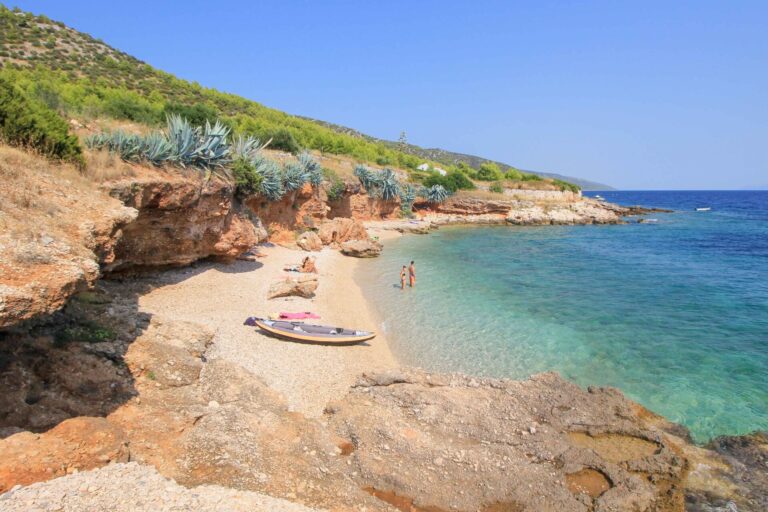
Hvar Town is the glamour island. The harbour-front Riva fills with yachts in July and August. In fact, the bars behind it run late. Carpe Diem in town opens at dusk and switches to a club night after midnight.
The real set-piece is Carpe Diem Beach on Stipanska, one of the Pakleni Islands just offshore. Boat parties run there Thursday to Saturday at peak season. Cocktails sit around €18 to €25. A night out adds up fast. Water taxis to the Pakleni Islands run all day from the harbour for roughly €10 to €15 return.
Hvar is more than the party, though. Lavender is a genuine local industry around the inland village of Velo Grablje. Mid-June is the moment to catch the fields in bloom before the harvest. The Pakleni Islands themselves are calm, pine-fringed coves once you step away from the beach club.
Honest negatives: Hvar Town is the most expensive of the three. In peak season the noise from harbour bars carries late into the night. If you book accommodation in the old town centre for July or August, expect to hear it. Instead, stay in Stari Grad or a quieter bay if you want to sleep. You can compare hotels on Hvar on Booking.com by area before you book.
Hvar suits: couples wanting a romantic-but-lively base, friend groups, and anyone whose trip is built around boat days and going out.
A day on the water is the best way to see why people love Hvar. This private Pakleni Islands and Zlatni Rat boat tour from Hvar reaches the quiet coves the water taxis skip. It adds Brač’s famous beach in one trip.
What is Brač actually like, and who does it suit?
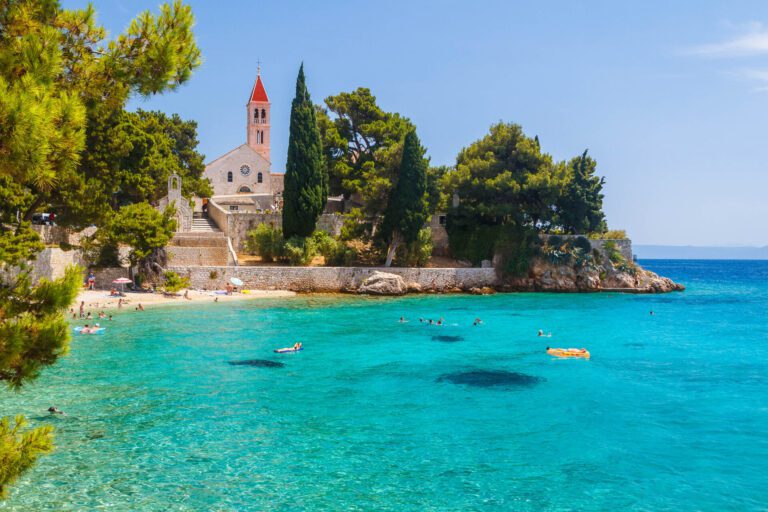
Brač is the beach island. Its star is Zlatni Rat, the horn-shaped pebble spit near the town of Bol. The spit runs just under half a kilometre. It changes shape with the wind and currents. That is why it shows up on every Croatia postcard.
Bol is the lively southern town. Supetar in the north is the main ferry gateway and a calmer family base. The island is bigger than it looks. Zlatni Rat sits about 2 km west of Bol, a 20 to 30 minute walk or a short shuttle from the harbour.
Brač is the easiest of the three to reach and the most relaxed about budget. You get a genuinely famous beach without Hvar’s prices or Korčula’s distance. There is a good range of hotels on Brač on Booking.com in both Bol and Supetar.
Honest negatives: you really want a car here. The ferry lands at Supetar in the north. Bol and Zlatni Rat are on the south coast. The cross-island drive takes 40 minutes or so. Zlatni Rat also gets crowded in July and August. Go early morning or late afternoon if you want space. The water there is beautiful. But it is fine gravel, not sand. That surprises some families.
Brač suits: families with kids, beach-first travellers, and anyone wanting a famous spot without overspending.
What is Korčula actually like, and who does it suit?
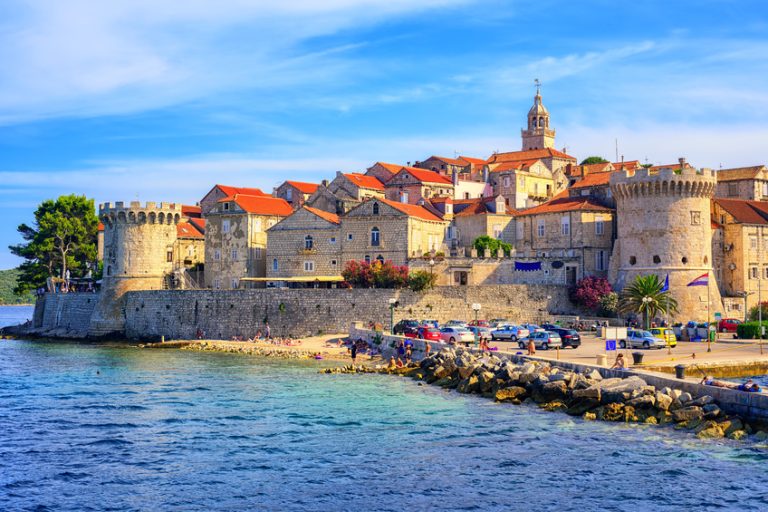
Korčula is the wine-and-history island. It is the slowest of the three. The walled old town juts into the sea on a small peninsula. In fact, it claims to be the birthplace of Marco Polo. The streets follow a herringbone pattern designed to block the wind.
The island makes two excellent indigenous white wines. Pošip grows across the island. Grk is a rare grape cultivated almost only in the village of Lumbarda on the eastern tip. An afternoon tasting in Lumbarda’s small family vineyards is the thing to do here. Meanwhile, the sandy beaches nearby are some of the few real sand beaches in Dalmatia.
Evenings on Korčula mean a long dinner and a wine bar, not a club. Vela Luka, the bigger port town on the west side, has more going on. But Korčula Town and Lumbarda stay calm.
Honest negatives: Korčula is the quietest island. That is exactly the point for some travellers and a letdown for others. If you want nightlife beyond a relaxed bar, this is the wrong island. It is also the furthest from Split. It works better as part of a longer Dalmatian trip than a quick getaway.
Korčula suits: wine lovers, history fans, and couples who want quiet, scenic evenings.
To taste why Korčula earns its wine reputation, book a Lumbarda wine tasting tour with local snacks. You can try the Grk and Pošip side by side at the source.
Hvar vs Brač vs Korčula: the comparison table
| Island | Vibe | Best for | Getting there from Split | Best beach / town |
|---|---|---|---|---|
| Hvar | Glamour, nightlife, lavender | Couples, groups, boat days | Catamaran ~55 min, from about €20–25 | Pakleni Islands / Hvar Town |
| Brač | Beaches, family-friendly, relaxed | Families, beach lovers, budget | Ferry to Supetar ~50 min, from about €4–6; catamaran to Bol ~1 hr, from about €23 | Zlatni Rat / Bol |
| Korčula | Wine, medieval history, quiet | Wine fans, history, couples | Catamaran 2 hr 20 min and up, from about €8–11 | Lumbarda sand beaches / Korčula Town |
Which is easiest to reach from Split?
Brač, by a clear margin. The Jadrolinija car ferry from Split to Supetar takes about 50 minutes and runs year-round. Tickets cost roughly €4 to €6 for a foot passenger. That makes it the cheapest and most frequent crossing of the three.
Hvar is next. Catamarans from Split to Hvar Town take about 55 minutes and cost around €20 to €25. Peak summer brings up to 17 daily sailings between Jadrolinija, Krilo and TP Line. Korčula is the long haul at 2 hours 20 minutes or more by catamaran. However, fares still start low, from about €8 to €11.
Always check live schedules before you book. Summer timetables shift and the fast catamarans sell out. Booking ferries online a few days ahead is worth it in July and August.
Which island for nightlife, beaches, wine, families, couples or quiet?
– Nightlife: Hvar, easily. Brač and Korčula have bars, not clubs.
– Beaches: Brač for Zlatni Rat and family-friendly space; Korčula for actual sand near Lumbarda.
– Wine: Korčula, no contest, for Pošip and Grk.
– Families: Brač, for the easy ferry, the famous beach and lower costs.
– Couples: Hvar if you want lively and romantic together; Korčula if you want calm dinners and wine.
– Quiet: Korčula, then Brač outside Bol. Avoid Hvar Town in peak season if quiet is the goal.
Which is best for a day trip vs an overnight stay?
Brač works as a day trip from Split. The ferry is short and frequent. You can reach Bol and Zlatni Rat and be back by evening. Hvar is doable as a day trip too. But you miss the nightlife that makes it Hvar. It rewards at least one overnight.
Korčula does not work well as a day trip from Split. The crossing eats over two hours each way. That leaves too little time on the island. Give Korčula at least one night, ideally two.
Can you combine two islands in one trip?
Yes. The best pairing depends on your pace. Hvar and Brač sit close together. Additionally, both connect easily to Split. A few nights of nightlife and boat days on Hvar, then beach time on Brač, is a natural combination.
Hvar and Korčula also link up well. The same Split to Korčula catamarans stop at Hvar Town on the way south. So you can do Hvar first, then continue to Korčula to slow down. No backtracking to Split.
Trying to do all three in under a week is rushed. Two islands plus Split is the sweet spot for a 7 to 10 day Dalmatian trip. For the full picture of routes and timing, see the Croatia island hopping guide.
A specific recommendation
For a first Dalmatian island trip of about a week, start with two nights in Split. Take the short ferry to Brač for two nights of beaches and Zlatni Rat. Then catamaran to Hvar for the final stretch of boat days and a couple of lively evenings. You get the easiest logistics, the famous beach and the glamour. No need to commit the whole trip to one mood.
Is your trip more about wine and quiet than going out? Swap Hvar for Korčula and give it two full nights. Korčula also sits on the route south toward Dubrovnik. That makes it a smart stop if you are heading that way. The Split to Dubrovnik logistics guide covers how that leg fits together.
Frequently asked questions
Hvar or Brač?
Hvar for nightlife, a glamorous scene and boat days. Brač for beaches, families and budget. Brač is cheaper and easier to reach from Split, with a 50-minute ferry to Supetar. Hvar is livelier but costs more, especially in July and August.
Which is the best Dalmatian island?
There is no single best. It depends on your trip. Brač wins for easy beach holidays. Hvar wins for nightlife and glamour. Korčula wins for wine, history and calm. Overall, for a first visit with a famous beach and simple logistics, Brač is the safest pick.
Hvar or Korčula for couples?
Choose Hvar if you want romance with a lively edge, cocktails and boat parties. Choose Korčula if you want quiet evenings, long wine dinners and a walled old town to wander. Korčula is more peaceful. Hvar is more social.
Which Croatian island is best for families?
Brač. The Split to Supetar ferry is short, frequent and cheap. Zlatni Rat is shallow and famous. The island is more relaxed and affordable than Hvar. Just plan to rent a car, since the ferry lands far from Bol.
Can you visit Hvar and Brač in one trip?
Yes. Both connect easily to Split and sit close together. A common plan is a few nights on Hvar for nightlife and boat days, then Brač for beaches. Some boat tours even reach Zlatni Rat on Brač and the Pakleni Islands off Hvar in a single day.
Is Korčula worth visiting if I don’t drink wine?
Yes, though wine is its strongest draw. The medieval old town, the Marco Polo history, the Moreška sword dance and the sandy Lumbarda beaches all stand on their own. It is the quietest of the three islands. It suits travellers who want calm over nightlife.
Next step
Decide your priority first. Nightlife points to Hvar. Beaches and family ease point to Brač. Wine and quiet point to Korčula. Finally, once you have picked, sort your Split base. Every island route runs through it. Start with the Split travel guide to plan the mainland half of your trip.