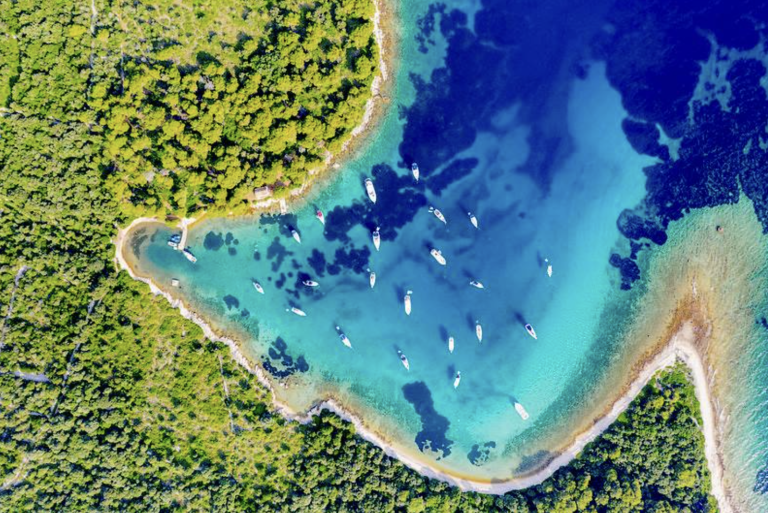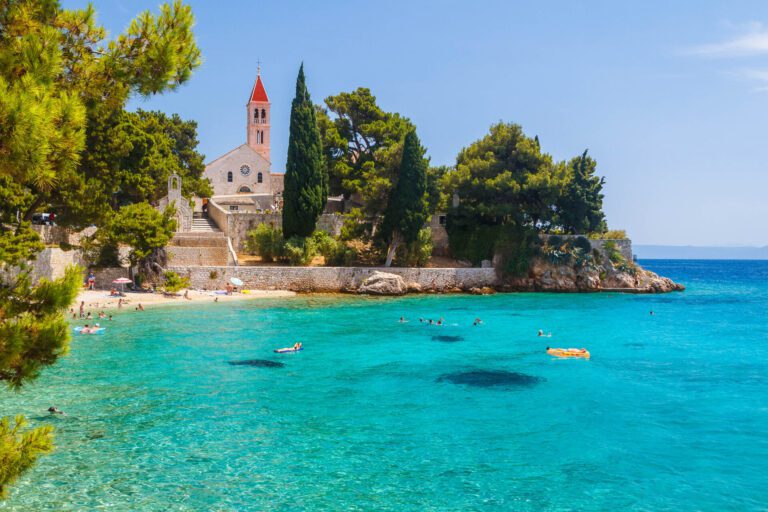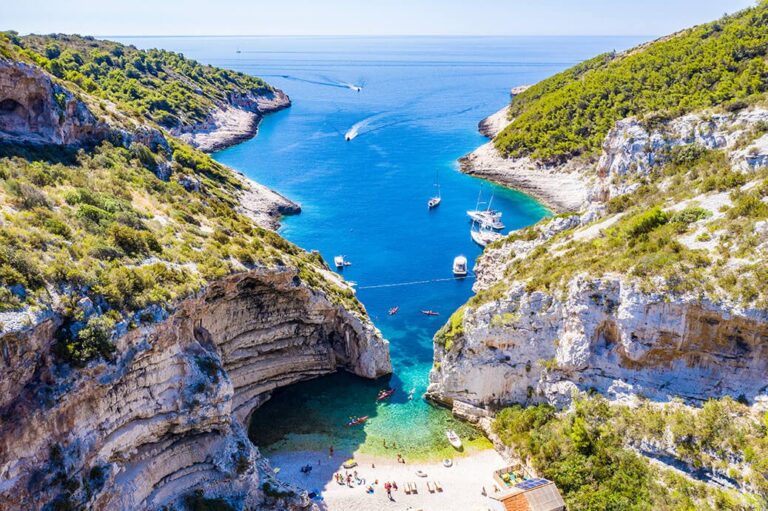
Most Croatian beaches are pebble or rock. Pack water shoes and adjust your expectations before you arrive. Soft sand is rare here. The few sandy beaches sit on islands that take effort to reach. That is the honest starting point.
Want actual sand? Your shortlist is short. Sakarun on Dugi Otok, Šunj on Lopud, Pasjača below Konavle, and Lovrečina on Brač. Want the famous postcard beaches? Those are pebble. Zlatni Rat on Brač and Stiniva on Vis lead that list. The water runs clear and warm at all of them. The ground underfoot changes everything else about your day.
This guide splits them by what they actually are, how you get there, and who each one suits. No beach here gets sold as something it is not.
Does Croatia have sandy beaches?
Yes, but very few. Croatia’s coast runs roughly 5,800 kilometres long. It is overwhelmingly pebble, shingle, or smooth rock platforms you walk into the sea from.
The country has maybe a dozen genuinely sandy beaches worth the trip. Most sit on islands. Several stay shallow enough for small kids. Almost all get busy in July and August. Sand here is the exception, not the default.
The actual sandy beaches in Croatia
These are the real ones. Soft underfoot, shallow entries, and worth the ferry or the drive.
Sakarun, Dugi Otok. White sand and clear, shallow water on the northwest side of Dugi Otok, in the Zadar region. The bay runs just under a kilometre long. A pine forest behind it gives you shade. Take the ferry from Zadar to Brbinj, then drive 20 minutes across the island. A car helps a lot here.
Šunj, Lopud. A one-kilometre stretch of dark brown sand on the south side of Lopud, near Dubrovnik. The sea stays shallow a very long way out. That is why families love it. Lopud has no cars. Take a ferry from Dubrovnik to Lopud town, then walk about 25 minutes or grab a golf-buggy taxi to the bay.
Pasjača, Konavle. A small sand-and-shingle beach at the base of dramatic cliffs, below the village of Popovići, south of Cavtat. It went Instagram-famous fast. So it gets crowded. The descent is a long, steep set of stairs cut into the rock. Wear proper shoes for the climb down. Skip it if stairs are a problem for you.
Lovrečina, Brač. The only properly sandy beach on Brač, on the north coast about 4 kilometres east of Postira. Fine light sand, shallow water, old church ruins behind it. Reach it by car, by bike, or on the 4-kilometre coastal path from Postira.
The best pebble beaches in Croatia
The most photographed beaches in the country are pebble, not sand. They look incredible and the swimming is excellent. You will still want water shoes.
Zlatni Rat, Brač. The horn-shaped spit near Bol, on the south coast of Brač. Probably the single most recognisable beach in Croatia. Smooth white pebbles, and a tip that shifts shape with the wind and currents. From Bol, walk the shaded 20-minute coastal path, take the little tourist train (about 15 minutes), or hop a water taxi from the harbour.
Stiniva, Vis. A near-enclosed cove on the south coast of Vis. Tall limestone cliffs frame it, with a narrow gap to the sea. White pebbles, deep clear water, and one of the harder beaches to reach. You either walk down a steep 20-minute rocky path from the road above, or arrive by boat or kayak. Most visitors take the boat. Stiniva sits on the same island as the Mamma Mia 2 filming locations. It pairs well with a Vis day.
Banje, Dubrovnik. The famous beach just outside the Old Town walls. More shingle and rock than sand, with the iconic view back to Dubrovnik. Photogenic and central. That also means crowded and pricier than most. Good for a quick swim between sightseeing, less so for a full beach day.
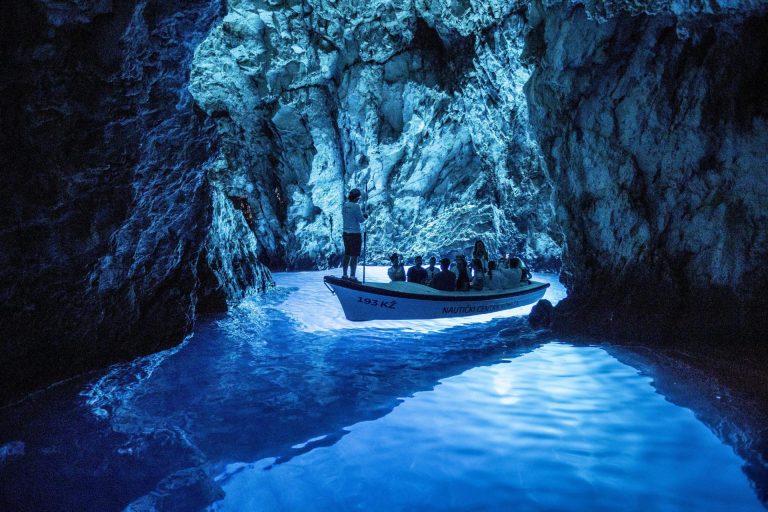
Reaching the Vis beaches by road feels like a hassle. A boat tour handles the logistics for you. This island-hopping day from Split reaches Stiniva cove, the Blue Cave, and Hvar in one go. It is the easiest way to swim at Stiniva without the cliff path.
Best beaches in Croatia by region and island
The coast splits roughly into four beach zones. Where you base yourself decides what you can reach in a day.
Dalmatia (Split and the central islands) has the headline beaches: Zlatni Rat on Brač, Stiniva on Vis, plus Lovrečina sand on Brač. Split is the best launch point for island day trips.
Dubrovnik and the south gives you Banje for convenience, Šunj on Lopud for sand, and Pasjača in Konavle for drama. The Elaphiti islands off Dubrovnik are an easy ferry hop.
Zadar and the north Dalmatian islands is where Sakarun lives, on Dugi Otok. Quieter crowds than the Split islands, and good if you want sand without the Bol queues.
Istria in the northwest runs almost entirely on rock platforms and concrete sunbathing decks, not sand or pebble. The water is clean. The towns are lovely. Just go knowing you will lie on stone, not sand.
Best beaches in Croatia for families
For young kids you want sand and shallow water. That narrows the list fast.
Šunj on Lopud is the standout. Dark sand, and water that stays shin-deep for ages. Sakarun on Dugi Otok is the other strong choice. It has shallow clear water and pine shade for the hottest part of the day. Lovrečina on Brač works well too, with sand and an easy entry.
Skip Pasjača with small children. The stair descent is long and steep. The beach itself is narrow.
Best quiet and quieter beaches in Croatia
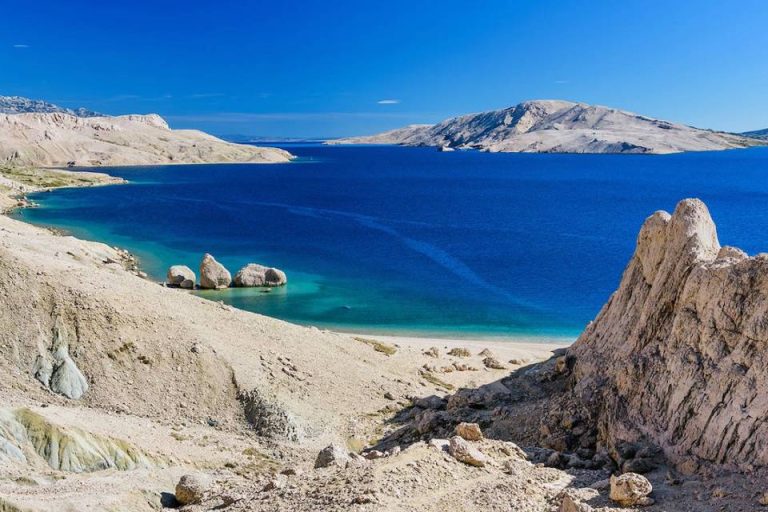
The famous beaches are crowded in peak season, full stop. To find space, change your timing or your island.
At Stiniva and Zlatni Rat, arrive before 10am or after 4pm. That dodges the day-tour crowds. On the islands, the small unnamed coves between the headline beaches stay almost always emptier than the one everyone photographs.
For genuinely calmer days, head to the north Dalmatian islands around Zadar. Dugi Otok and Pag’s quieter bays see fewer crowds than the Split-and-Hvar circuit. A rental car or a kayak opens up coves the day boats never reach.
Comparison: sandy vs pebble beaches in Croatia
| Beach | Island / Location | Sand or pebble | How to reach | Best for |
|---|---|---|---|---|
| Sakarun | Dugi Otok (Zadar) | Sand | Ferry to Brbinj + 20-min drive | Families, clear shallow water |
| Šunj | Lopud (near Dubrovnik) | Sand | Ferry to Lopud + 25-min walk | Families, shallow swimming |
| Pasjača | Konavle (near Cavtat) | Sand and shingle | Drive + steep cliff stairs | Photos, fit adults |
| Lovrečina | Brač (north coast) | Sand | Car, bike, or coastal path from Postira | Families on Brač |
| Zlatni Rat | Brač (Bol) | Pebble | Walk, tourist train, or water taxi from Bol | Iconic views, swimming |
| Stiniva | Vis (south coast) | Pebble | Steep path or boat / kayak | Scenery, boat-tour day |
| Banje | Dubrovnik (Old Town) | Shingle and rock | Walk from Old Town | Quick swim, convenience |
Why water shoes matter in Croatia
This is the one piece of kit that changes your trip. On pebble beaches the stones run hot and hard to walk on. On rocky entries, sea urchins wait. Their spines hurt and break off in your foot.
Flip-flops slip off in the water and do nothing against urchins. Cheap rubber reef shoes cost about 10 to 15 euros locally. They solve both problems and let you walk into the sea without wincing. Bring a pair per person, including kids. You will use them every single swim.
Beach practicalities: shade, facilities, and getting there
Shade is not guaranteed. Sakarun and Zlatni Rat have pine cover; many smaller coves have none, so bring a sun umbrella or arrive early for a shaded spot.
Facilities vary widely. The famous beaches (Zlatni Rat, Banje, Sakarun) have bars, loungers, and toilets. Remote coves like Stiniva have little or nothing. Carry your own water and snacks for those. For anything beyond your base town, a hire car removes a lot of friction. Ferry-plus-bus combinations to island beaches eat hours. Discover Cars compares Croatian rental prices across Split and Dubrovnik airports.
You can also plan around the islands instead. The Croatia island-hopping guide covers the routes that reach these beaches. Zlatni Rat and Lovrečina both sit on Brač. Base yourself there and you reach two of the best in one trip.
Frequently asked questions
Does Croatia have sandy beaches?
Yes, but only a handful. The coast is overwhelmingly pebble and rock, with genuine sand limited to about a dozen beaches, mostly on islands. The best sandy ones are Sakarun on Dugi Otok, Šunj on Lopud, and Lovrečina on Brač.
What is the best beach in Croatia?
For sheer scenery and fame, Zlatni Rat on Brač and Stiniva on Vis lead the list, though both are pebble. For soft sand and easy swimming, Sakarun on Dugi Otok and Šunj on Lopud are the top picks.
Are Croatian beaches rocky?
Mostly, yes. Expect pebble, shingle, or flat rock platforms at the large majority of beaches, especially in Istria. This is why water shoes are close to essential.
Where is the best sandy beach in Croatia?
Sakarun on Dugi Otok is the most-loved white-sand beach, with long shallow water and pine shade. Šunj on Lopud near Dubrovnik is the best sandy beach for families thanks to its very shallow, calm entry.
Do you need water shoes in Croatia?
For most beaches, yes. Pebbles are hard to walk on and rocky entries can have sea urchins. A cheap pair of reef shoes (10 to 15 euros) makes every swim more comfortable and protects your feet.
Plan your beach days
Pick one sandy beach and one pebble beach. That way you see both sides of the Croatian coast. Base yourself near a good ferry port like Split or Zadar. You can compare beach-base hotels in Split on Booking.com to stay close to the boats. If you are still mapping out the trip, the 7-day Croatia itinerary shows how to string the islands and coast together before you book.