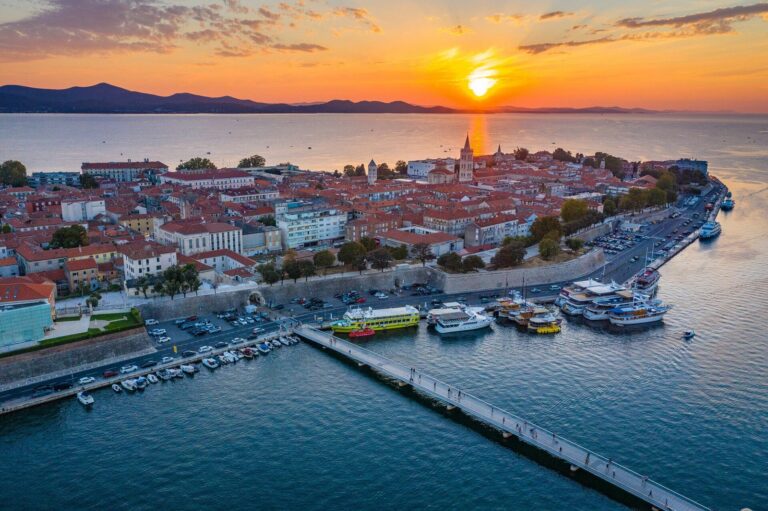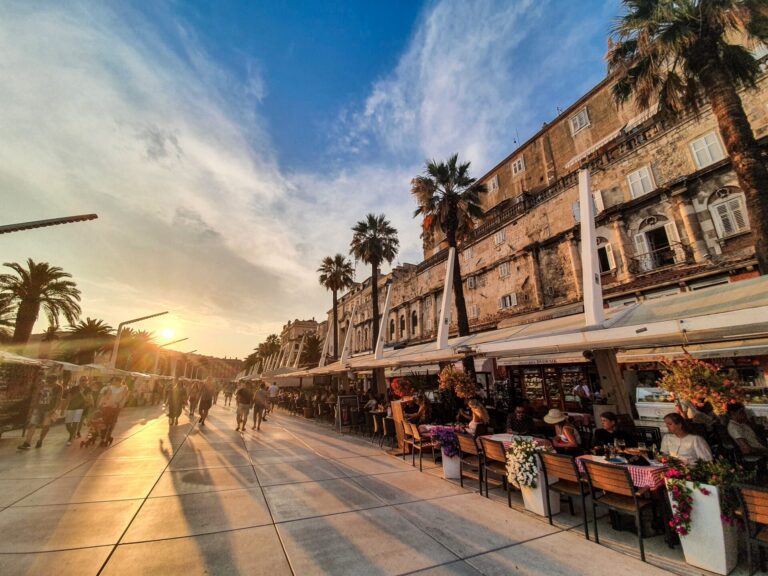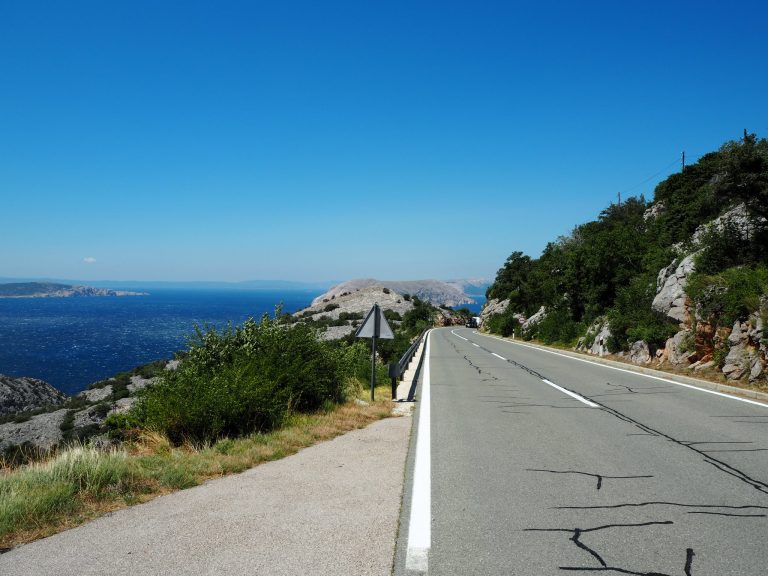
Istria sits at the top of Croatia, a short drive from Slovenia and Italy. One week is enough to see the best of it. This itinerary runs Rovinj, Pula, Brijuni, Poreč, the hill towns, and finishes near Opatija. You get Venetian harbours, a Roman arena, truffle country, and quiet beaches.
Rent a car for this trip. The coast has buses between the big towns. But Brijuni, the hill towns, and the best beaches are hard to reach without wheels. Discover Cars compares rentals across Pula and Rijeka airports, the two main pickup points for Istria.
Is one week enough for Istria?
Yes. Istria is small. Most drives between stops run under an hour. Seven days lets you slow down in Rovinj, spend a full day in the hill towns, and still get beach time. Base yourself in one or two places rather than packing every night somewhere new.
Day 1: Rovinj and its old town
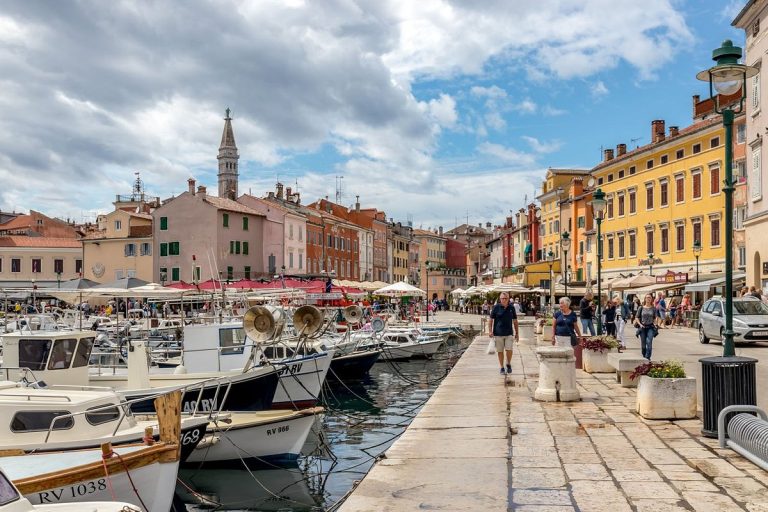
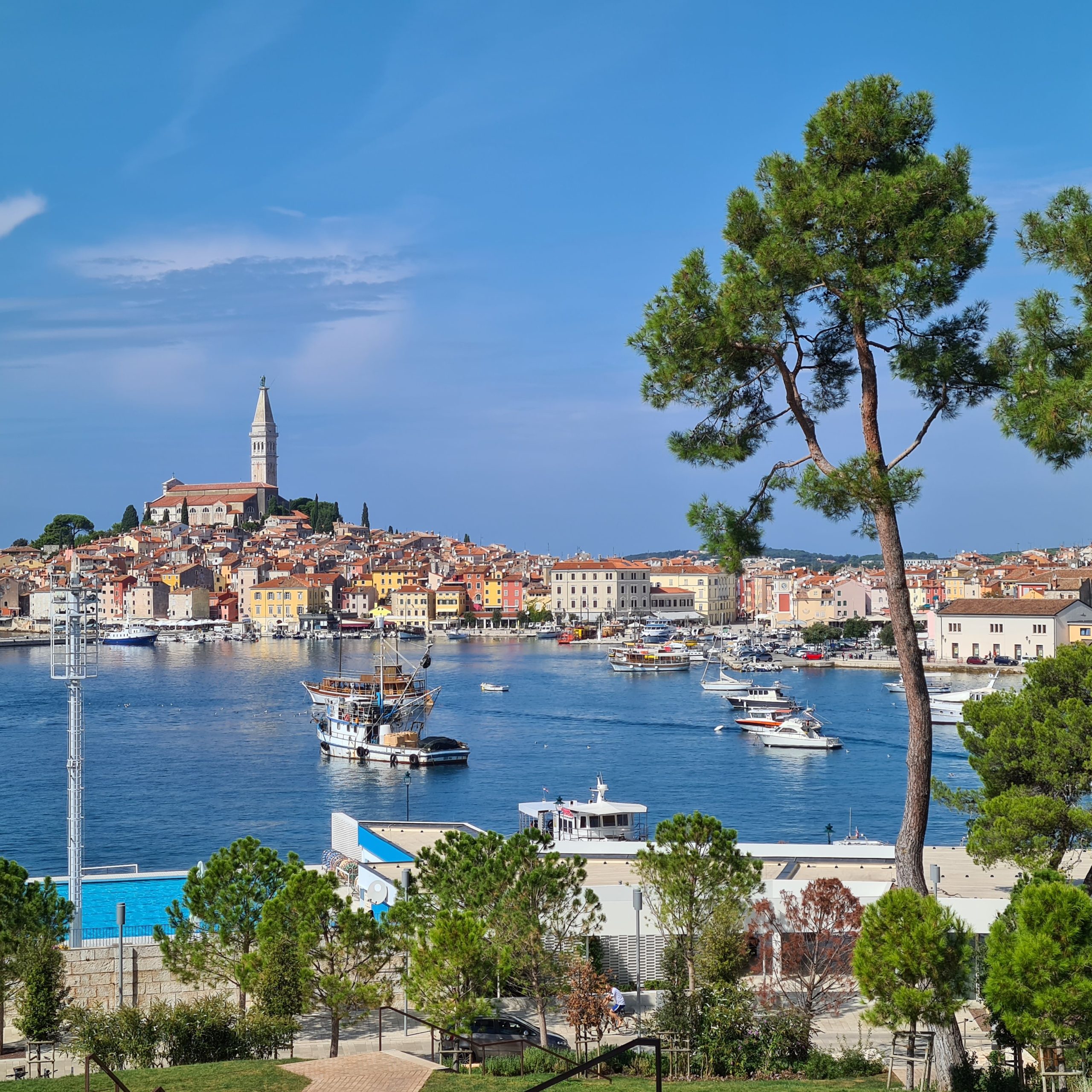
Start in Rovinj on the west coast. It is the prettiest town in Istria. The old town climbs a small peninsula in a tangle of lanes and pastel houses. Walk up to the Church of St. Euphemia at the top. The bell tower view over the red roofs and the sea is the best in the region. Spend the evening on the waterfront with a glass of Malvazija, the local white wine.
Day 2: Pula and the Roman arena
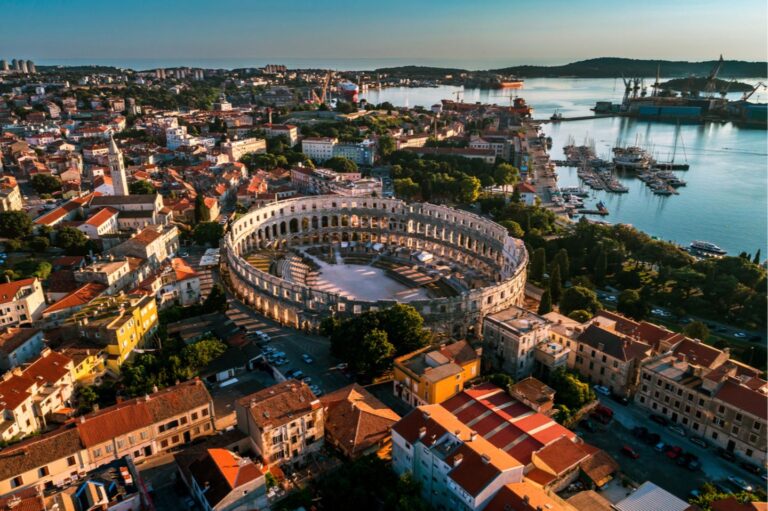
Drive south to Pula, about 40 minutes from Rovinj. The Pula Arena is the headline sight. It is a Roman amphitheatre from the 1st century, one of the best preserved in the world. You can walk the arena floor and the underground chambers. Nearby sit the Temple of Augustus, the Arch of the Sergii, and the old Forum square. You can book Istria tickets and guided day tours on GetYourGuide if you want to skip queues in summer.
Day 3: Brijuni National Park
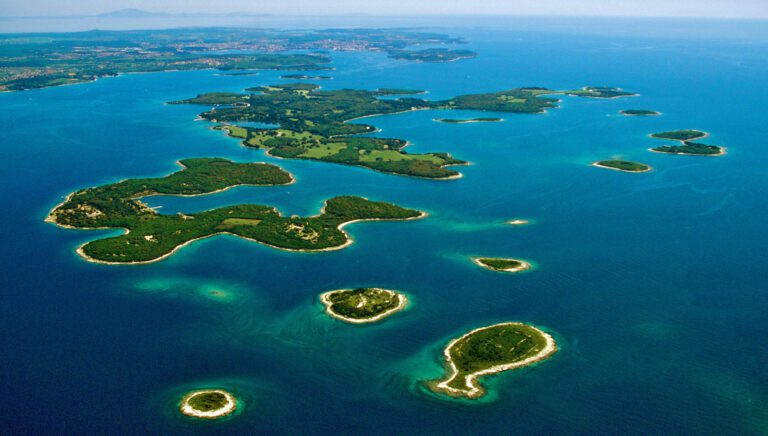
Brijuni is a group of islands off the west coast. You reach them by boat from the town of Fažana, just north of Pula. The park mixes nature with odd history. President Tito kept a summer residence here, and a small safari park still holds animals gifted by world leaders. Walk or cycle the trails on Veli Brijun. Book the official boat transfer ahead in July and August. Sailings sell out.
Day 4: Poreč and the Euphrasian Basilica
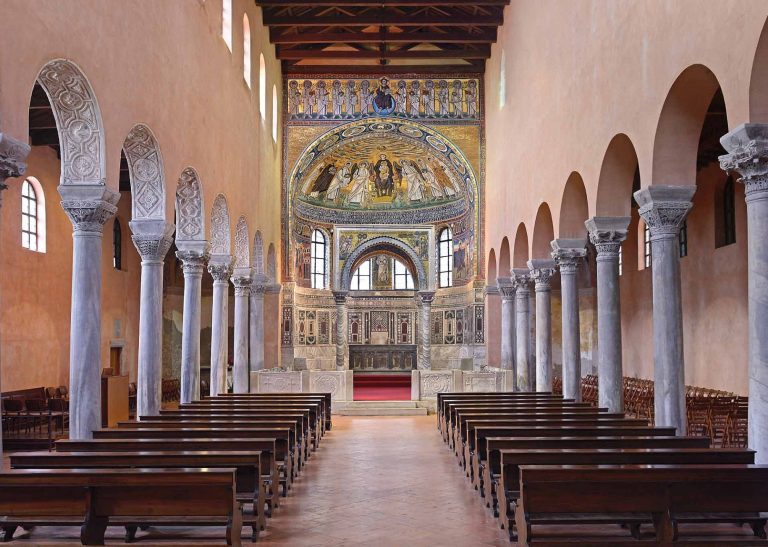
Head up the coast to Poreč. The old town sits on a narrow peninsula laid out on the original Roman street grid. The must-see is the Euphrasian Basilica, a UNESCO World Heritage site. Its 6th-century gold mosaics are stunning. The coast around Poreč has long stretches of pebble and rock beach with clear water. Spend the afternoon swimming.
Day 5: Grožnjan and Hum, the hill-town day
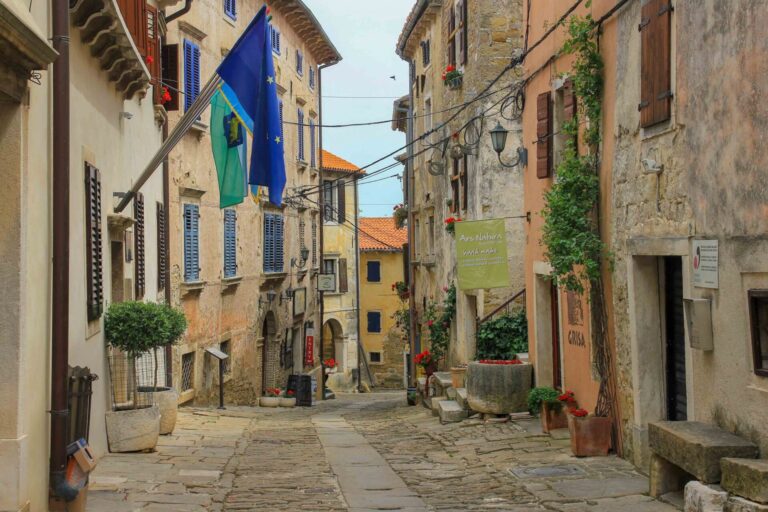
Turn inland for the day. Grožnjan is a tiny hilltop town full of artists’ studios and galleries. It is quiet, walkable, and full of views over green valleys. From there, drive to Hum, billed as the smallest town in the world. Only a couple of dozen people live inside its walls. Hum also sits on the Glagolitic Alley, a road lined with monuments to Croatia’s old Slavic script. Read the guide to the Glagolitic alphabet before you go to know what you are looking at.
Day 6: Motovun and truffle country
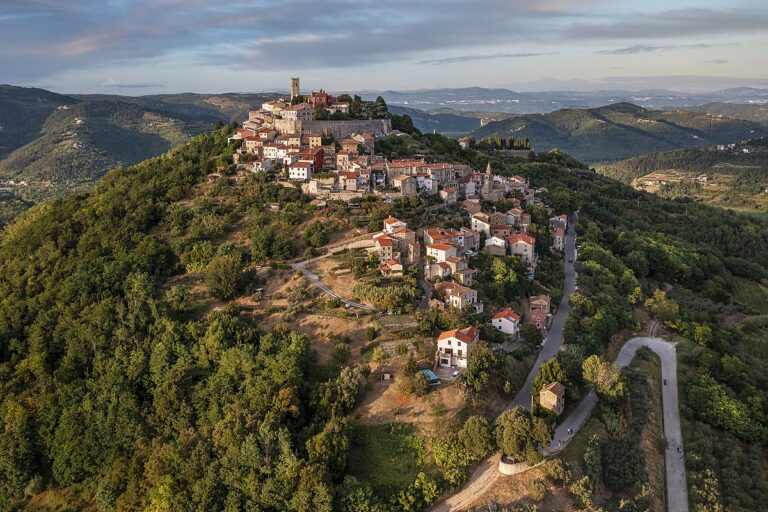
Motovun is the most famous hill town in Istria. It crowns a steep hill above the Mirna valley, ringed by medieval walls. Walk the ramparts for the view. The valley below is truffle country. Istria produces some of the best white and black truffles in the world. Try them shaved over fresh pasta at a local konoba. You can also join a hunt with dogs in the forests near Livade. This guided truffle-hunting walk includes a tasting. The full truffle hunting in Istria guide covers where to go and what it costs.
Day 7: Opatija and Rabac
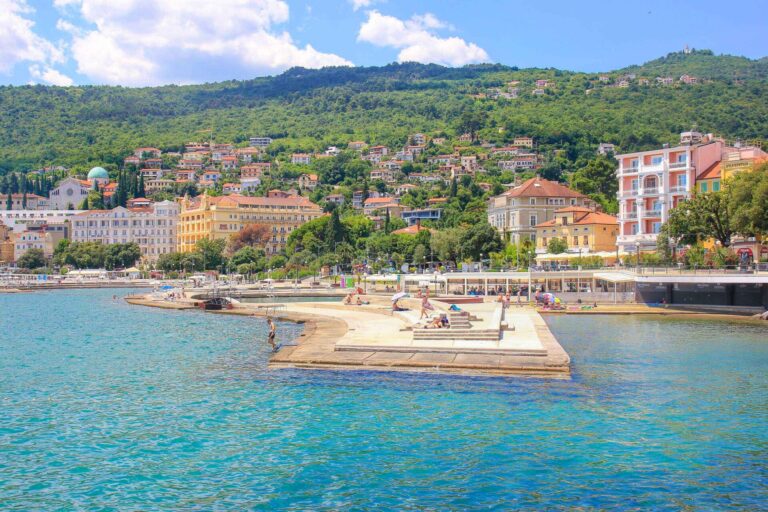
Finish on the eastern side. Opatija is an old Habsburg-era resort town. Its seafront promenade, the Lungomare, runs for kilometres past grand villas and gardens. It is made for a slow morning stroll. In the afternoon, drop down to Rabac for a last swim. Its bright pebble beaches and clear water are an easy end to the week. Opatija also sits close to Rijeka airport, handy if you fly out from there.
Do you need a car in Istria?
For this itinerary, yes. Buses link Pula, Rovinj, and Poreč on the coast. But Brijuni, Grožnjan, Hum, and Motovun are slow or impossible by public transport. A car turns the inland hill towns into easy half-day trips. Pick it up at Pula or Rijeka airport. Compare prices on Discover Cars before you arrive, since airport desks cost more on the day.
Where to stay in Istria
Rovinj is the best single base for a first trip. It is central, beautiful, and an easy drive to Pula and the hill towns. Poreč suits families who want more beach. For the inland days, one night in or near Motovun is a lovely change of pace. Compare apartments and hotels on Booking.com. Book early for July and August. The good places in Rovinj go months ahead.
When is the best time to visit Istria?
May, June, and September are ideal. The weather is warm. The sea is swimmable. The towns are calmer than peak summer. July and August are hot and busy, especially on the coast. Truffle season peaks in autumn, so October is great for food even as the beaches cool. Istria also has caves worth a detour, like Baredine near Poreč. See our roundup of the best caves in Croatia if you want one in the mix.
Frequently asked questions
How many days do you need in Istria?
Five to seven days is the sweet spot. Five covers the highlights of Rovinj, Pula, and the hill towns. Seven lets you add Brijuni, more beach time, and a slower pace.
What is the best town to base yourself in Istria?
Rovinj. It is central, walkable, and within an hour of Pula, Poreč, and the hill towns. Poreč is the better pick if you want more beach near your door.
Is Istria worth visiting?
Yes. It packs Roman ruins, Venetian towns, world-class truffles, and quiet beaches into a small area. It feels closer to Italy than the rest of Croatia, with fewer crowds than Dubrovnik or Split.
Can you visit Istria without a car?
Partly. Buses connect Pula, Rovinj, and Poreč. But the hill towns and Brijuni are hard to reach without a car. For the full itinerary, rent one.
What food is Istria known for?
Truffles, olive oil, fresh seafood, and Malvazija white wine. The inland hill towns are the heart of the truffle scene. The coast is the place for seafood.