Glagolitic script is the alphabet behind some of Croatia’s oldest written monuments, and the easiest mistake is thinking it is just a museum topic. In Croatia, it still appears on stone inscriptions, church heritage, book design, souvenirs and walking routes.
The short version: Glagolitic was the first Slavic alphabet. Croatia matters because it kept using the script for centuries, especially in church writing and coastal regions such as Kvarner, Istria and Dalmatia.
What is Glagolitic script?
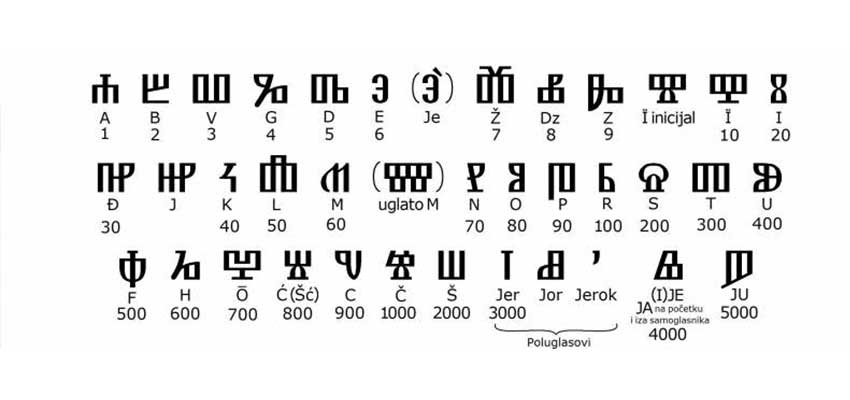
Glagolitic is the oldest known Slavic alphabet, created in the 9th century for writing Slavic liturgical texts. It is usually connected with the mission of Saints Cyril and Methodius and the spread of Old Church Slavonic.
It is not the same as Cyrillic. Cyrillic developed later and became much more widely used, while Glagolitic survived longest in specific religious and cultural settings.
In Croatian, you will usually see it called glagoljica. The word can refer to the script itself, the written tradition around it, or the stone-letter aesthetic you see in places like Krk and Istria.

Why is Glagolitic important in Croatia?
Croatia is one of the few places where Glagolitic was not just an early medieval experiment. Croatian clergy used it for religious books and inscriptions for centuries, and the script became part of Croatian cultural identity.
The best-known example is the Baška Tablet from around 1100. It was found in Jurandvor near Baška on the island of Krk, and it is one of the key early monuments of Croatian language and literacy.
Older local traditions sometimes credit St. Jerome with the script, but that is not the standard scholarly explanation. The safer explanation is that Glagolitic is linked to the 9th-century Slavic mission of Saints Cyril and Methodius, while Croatia later preserved and developed its own Glagolitic tradition.
Where can you see Glagolitic script in Croatia?
You can see Glagolitic in museums, churches and public monuments, but the most useful travel route is in northern Croatia. Krk and Istria are the easiest places to connect the script to real locations instead of reading about it in the abstract.
| Place | Why it matters | How to visit |
|---|---|---|
| Jurandvor, Krk | Home of the Baška Tablet site near Baška | Visit from Baška or Krk town |
| Baška, Krk | Closest base for the Baška Tablet story | Stay on Krk or visit by car |
| Glagolitic Alley, Istria | A route of monuments between Roč and Hum | Best by car; about 7 km |
| Zagreb museums/libraries | Good for manuscripts and context | Check current exhibitions first |
| Coastal churches | Some preserve inscriptions and Glagolitic heritage | Look for local heritage signs |
If you are planning an Istria trip, combine the Glagolitic Alley with inland stops like Roč, Hum and Motovun. This pairs naturally with our guide to truffle hunting in Istria, because the same inland route works well for both.
What is the Baška Tablet?
The Baška Tablet is a limestone inscription from around 1100, found in the church of St. Lucy in Jurandvor near Baška on Krk. It is important because it records early Croatian language in Glagolitic script and includes the Croatian royal name of King Zvonimir.
The original tablet is kept in Zagreb, while Jurandvor keeps the place itself central to the story. That split matters for visitors: Krk gives you the landscape and context, Zagreb gives you the museum object.
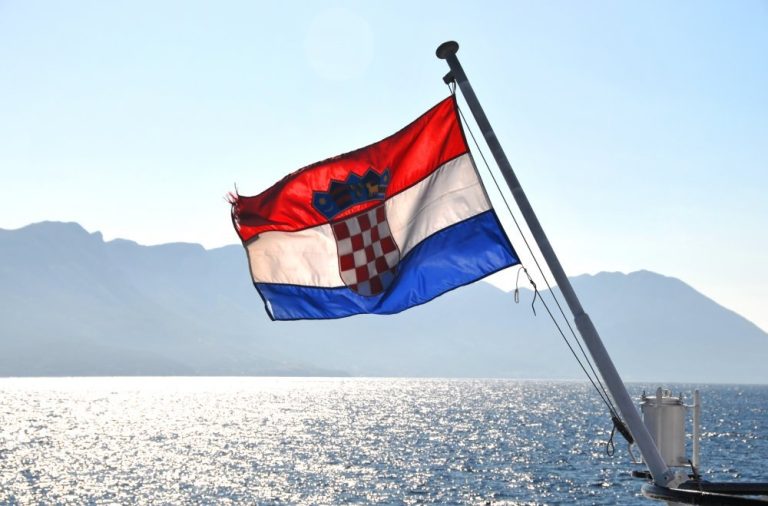
For a broader culture route, pair this topic with our guide to Croatia’s UNESCO World Heritage Sites and the article on Croatia’s tricolor flag.
Is Glagolitic still used today?
Glagolitic is not used as Croatia’s normal writing system today. Modern Croatian uses the Latin alphabet.
Still, the script has not disappeared. You will see it in religious heritage, academic work, stone monuments, graphic design and tourist souvenirs. The honest caveat: many souvenir versions are decorative rather than historically precise.
Frequently asked questions
What is Glagolitic script?
Glagolitic is the oldest known Slavic alphabet. It was created in the 9th century for writing Slavic liturgical texts and is closely connected with the mission of Saints Cyril and Methodius.
Is Glagolitic the same as Cyrillic?
No. Glagolitic came first, while Cyrillic developed later and became more widely used across Slavic languages. The letter shapes are different, and the historical paths are different.
Why is Glagolitic important in Croatia?
Croatia preserved a strong Glagolitic tradition for centuries, especially in church writing and coastal regions. The Baška Tablet on Krk is one of the best-known examples of early Croatian language written in Glagolitic script.
Where can I see Glagolitic script in Croatia?
The easiest places are Jurandvor and Baška on Krk, plus the Glagolitic Alley between Roč and Hum in Istria. Zagreb is useful if you want museum and manuscript context.
Who invented Glagolitic?
The script is usually connected with the 9th-century Slavic mission of Saints Cyril and Methodius. Older local traditions sometimes credit St. Jerome, but that is not the standard scholarly explanation.