Goli Otok is not a normal island day trip.
It is a bare, exposed island in the northern Adriatic that became one of Yugoslavia's most notorious prison sites after the Tito-Stalin split. You can visit today, usually by seasonal boat excursion, but the island makes more sense when you treat it as a place of memory rather than a strange ruin to wander through.
This guide explains what happened on Goli Otok, how visitors can reach it from Rab or nearby Kvarner bases, what to expect on the island, and why a guided visit is usually better than going with no context.
If you are planning the region around it, pair this with the Goli Otok destination guide, the Rab Croatia travel guide and the broader Kvarner travel guide. Goli Otok is easiest to understand as part of the northern Adriatic, not as an isolated curiosity.
Quick Answer: What Is Goli Otok?
Goli Otok is an uninhabited island in Croatia's Kvarner region, best known as a former Yugoslav prison island.
Its name means "bare island," which is accurate. The island has little shade, harsh stone terrain and abandoned prison-era remains. It sits between Rab, Krk and the mainland coast.
| Detail | Practical answer |
| Location | Northern Adriatic, near Rab and Krk |
| Best known for | Former Yugoslav prison island |
| Main historical period | Especially after the 1948 Tito-Stalin split |
| Today | Uninhabited, visited by seasonal boat excursions |
| Best base | Rab is the most logical base for many travelers |
| Visit style | Guided or well-researched half-day trip |
| Not ideal for | Beach days, small children, casual photo stops |
The short version: visit Goli Otok only if you want difficult history and can handle exposed terrain. If you just want a pretty Kvarner island day, choose Rab, Krk, Lošinj or Cres instead.
Why Is Goli Otok Important?
Goli Otok matters because it shows a hard part of Yugoslav history that many Croatia itineraries never touch.
After Yugoslavia broke with Stalin in 1948, the regime imprisoned people accused of supporting Stalin or opposing Tito's political line. Goli Otok became a place of punishment, forced labor, isolation and ideological pressure.
The island was not only about detention. Former prisoners and researchers describe systems of humiliation, surveillance, work punishment and prisoners being forced into violence or denunciation against other prisoners.
That is why the lazy nickname "Yugoslavian Alcatraz" is limited. It gives travelers a quick reference point, but it can flatten the political history into a prison-island gimmick.
Goli Otok is better understood as a site of political repression, memory and unresolved interpretation.
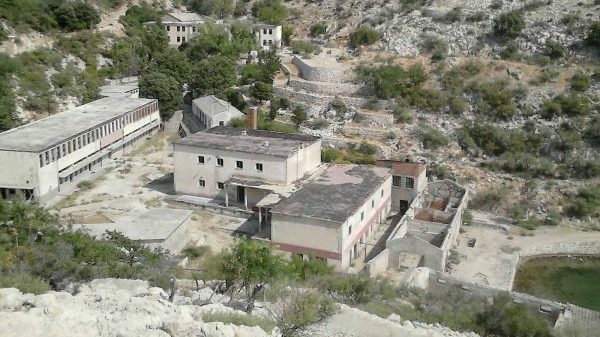
Goli Otok History in Short
Goli Otok's prison history is tied to the early Cold War.
In 1948, Yugoslavia's leader Josip Broz Tito split with Stalin and the Soviet-led Cominform. After that break, Yugoslav authorities targeted suspected Stalinists, real opponents and people accused of disloyalty.
Goli Otok opened as a prison camp in 1949. It held political prisoners in its most infamous period, especially men accused of being loyal to Stalin or against the Yugoslav Communist Party line.
The site later continued as a prison, but the political-prisoner period is what shaped its reputation. The island eventually closed as a prison site in the late 20th century and has since remained largely abandoned.
| Period | What changed |
| Before prison use | Bare island with limited settlement and infrastructure |
| 1948 | Tito-Stalin split creates political crisis inside Yugoslavia |
| 1949 | Goli Otok becomes a prison camp |
| 1950s | Island becomes strongly associated with political prisoners and forced labor |
| Later Yugoslav period | Prison use continues, with changing prisoner profiles |
| After closure | Buildings decay; visitors arrive by boat, often with limited interpretation |
Some details around prisoner numbers and categories differ by source, so be careful with any neat figure presented without context.
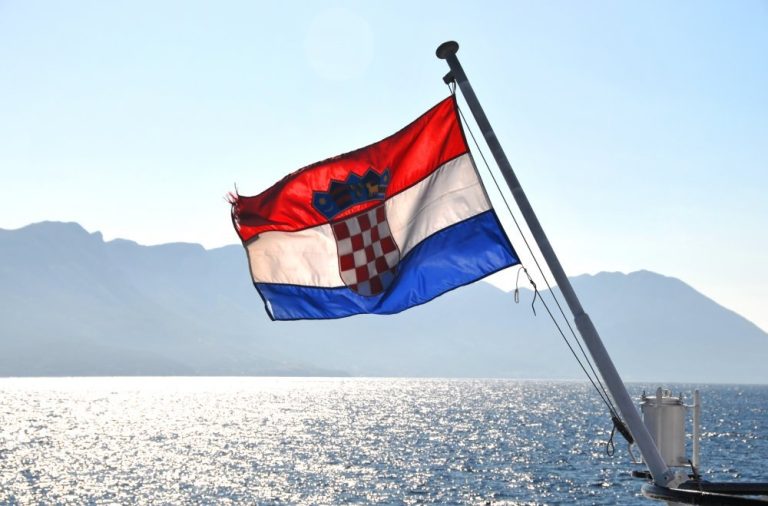
For wider Croatian identity and memory context, the Croatian flag meaning guide is a useful companion because it explains how modern state symbols relate to different historical periods. Different topic, same warning: simplified symbols can hide complicated history.
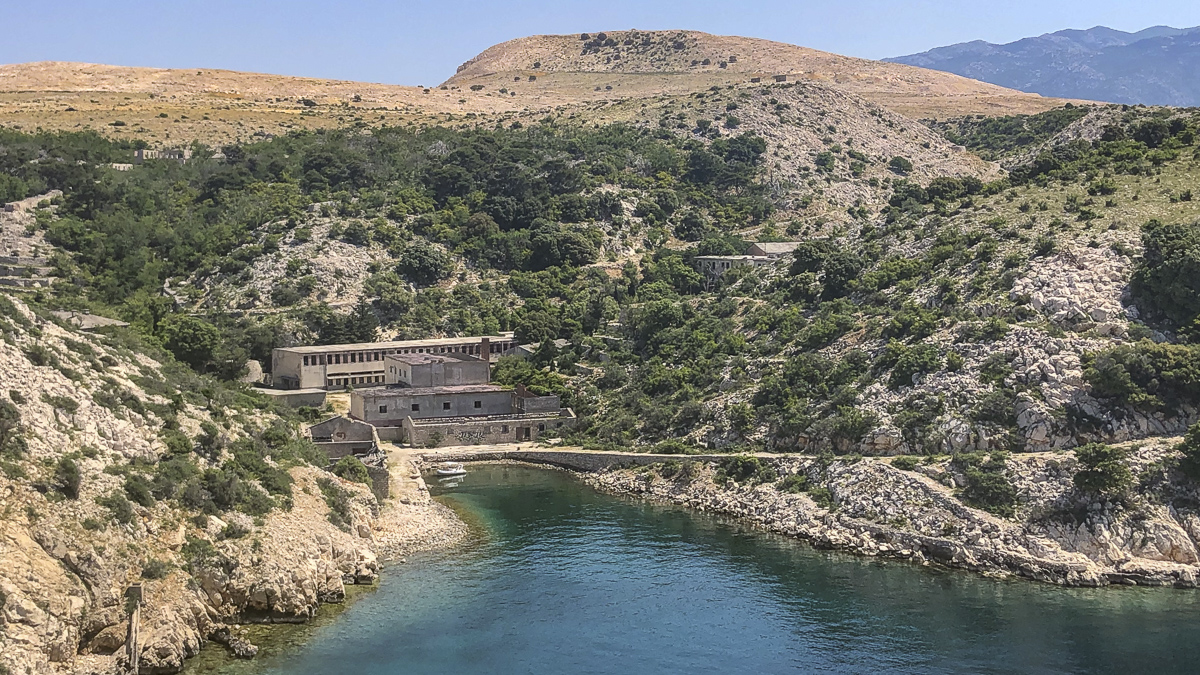
What Can You See on Goli Otok Today?
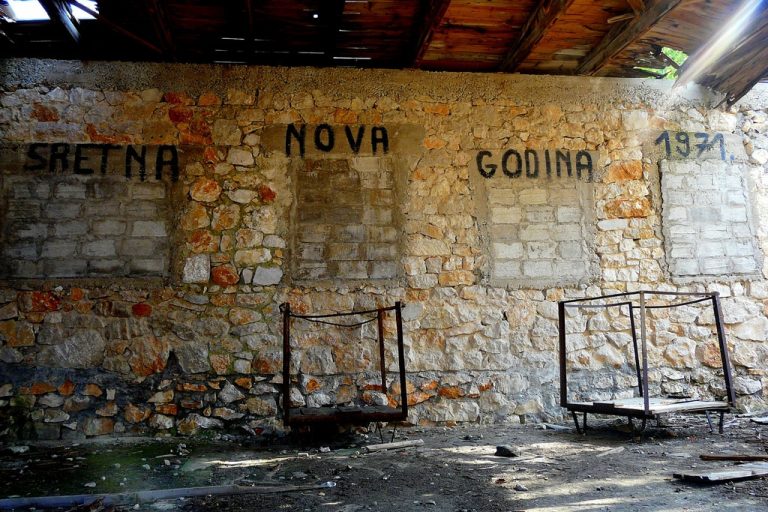
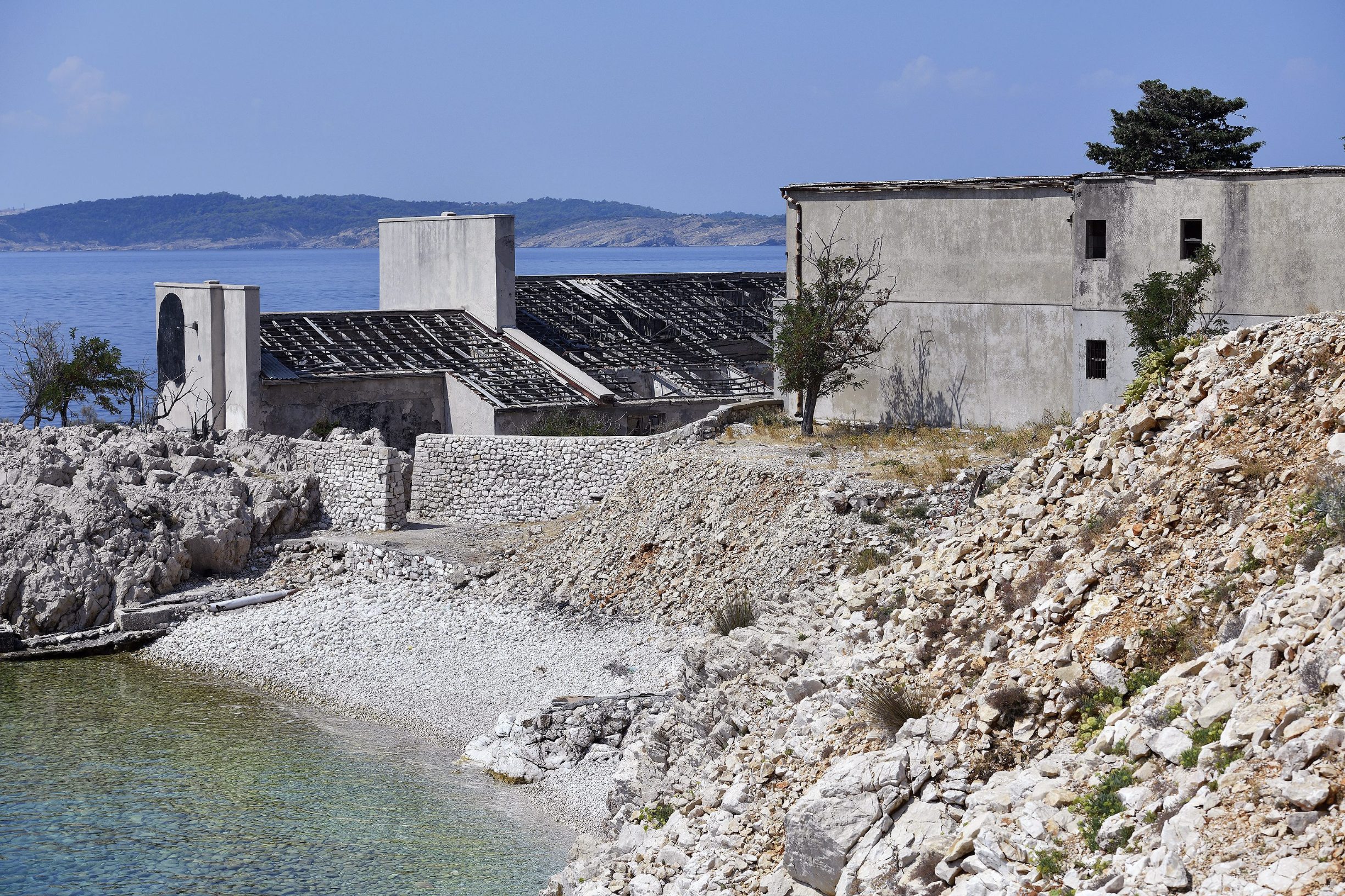
Today, visitors usually see abandoned buildings, prison remains, exposed paths, stone structures and traces of the island's industrial/prison infrastructure.
Do not expect a polished museum experience. Interpretation can be limited, signage may not be enough, and the island's condition is part of the difficulty. It can feel raw, neglected and unresolved.
That rawness is powerful if you know what you are looking at. Without context, it can feel like a set of empty ruins in brutal sun.
There are also sheep roaming freely on the island, including around the ruins. They are part of the current landscape, but they can startle visitors who are not expecting animals to appear in abandoned prison buildings.
Common visitor expectations:
| Expect | Do not expect |
| Abandoned prison remains | A fully curated museum route |
| Exposed walking in sun and wind | Shade, comfort or normal island facilities |
| Heavy history | A light beach excursion |
| Rough surfaces and ruins | Smooth accessibility |
| Boat-dependent access | Regular ferry-style independence |
| Free-roaming sheep | A controlled museum environment |
Bring water, closed shoes, sun protection and a sober attitude. This is not the place for climbing unsafe ruins or treating cells as a photo prop.
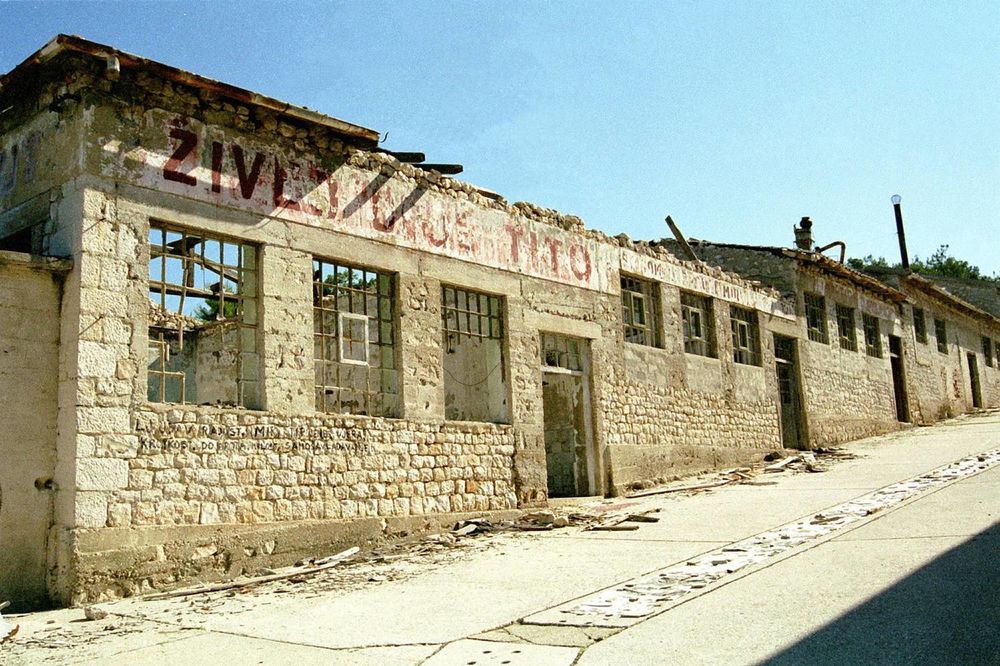
How Do You Get to Goli Otok?
Most visitors reach Goli Otok by seasonal boat excursion from Rab or nearby Kvarner departure points.
There is no normal public ferry that turns the island into an easy independent stop for most travelers. Operators, routes, schedules and guiding quality vary, and weather can change plans fast in this part of the Adriatic.
Rab is usually the most logical base because it is close and already has visitor infrastructure. Krk, the mainland coast and other Kvarner bases may work depending on the operator and season.
| Base | How it works | Best for |
| Rab | Seasonal excursions are commonly advertised from Rab/Lopar area | Easiest practical base |
| Krk | Some tours or private boat options may run seasonally | Travelers already staying on Krk |
| Mainland Kvarner coast | Possible with selected boat operators | Road-trip travelers |
| Independent private boat | Only with proper local knowledge and conditions | Experienced boaters, not casual visitors |
Before booking, ask what the tour actually includes. A quick landing with no explanation is very different from a guided historical visit.
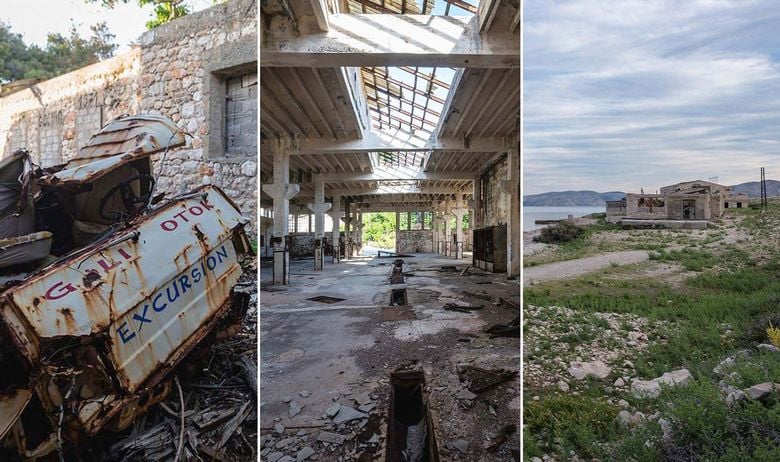
Should You Visit Goli Otok With a Guide?
Yes, a guide is strongly recommended if you want the visit to mean anything.
Goli Otok is not self-explanatory. Buildings are ruined, the historical layers are heavy, and the island does not always give visitors enough interpretation on site.
A good guide should explain the Tito-Stalin split, why prisoners were sent there, how punishment and forced labor worked, and what happened to the site after the political-prisoner period.
A weak tour may only give you ruins, a nickname and time to walk around. That is not enough for a place like this.
Ask these questions before booking:
| Question | Why it matters |
| Is there historical guiding on the island? | Avoids a context-free ruin stop |
| How long is the landing time? | Too short can feel shallow |
| Where does the boat depart? | Rab, Lopar, Krk and mainland routes differ |
| Is the route weather-dependent? | Bora and rough seas can change plans |
| Are there facilities on board or on land? | The island itself is limited |
| Is the tone respectful? | This is a former prison site, not a theme attraction |
Is Goli Otok Safe to Visit?
Goli Otok can be safe to visit with a sensible operator, good weather and realistic expectations.
The risks are practical rather than mysterious: sun exposure, heat, rough stone, broken structures, free-roaming sheep, limited shade, limited services and boat-dependent access. The island's name is not metaphorical; it is bare.
Wear closed shoes. Bring water. Avoid climbing unstable structures. Follow the guide's instructions, especially around ruins and landing areas.
Do not visit in bad weather or with a casual "we will figure it out" plan. Kvarner weather can shift, and the bora wind is not a minor detail on exposed islands.
Is Goli Otok Worth Visiting?
Goli Otok is worth visiting if you are interested in dark history, Yugoslav memory or responsible heritage travel.
It is not worth visiting if you want swimming, beach time, pretty island villages or a relaxed family excursion. Croatia has many better islands for that.
This is where the recommendation becomes deliberately narrow:
| You should go if… | You should skip it if… |
| You want difficult 20th-century history | You want a scenic boat day |
| You can join a guided visit | You would visit with no context |
| You are based on Rab/Kvarner | You would detour far from your route |
| You can handle exposed terrain | You need easy facilities or shade |
| You are comfortable with dark tourism done carefully | You want light entertainment |
If you are already on Rab, Goli Otok can be one of the region's most memorable half-day trips. If you are in Dubrovnik, Split or Istria with limited time, do not bend the whole route around it.
For less difficult Kvarner planning, use the Rab island guide or the Rijeka travel guide. They are better bases for normal travel decisions.
How to Visit Goli Otok Responsibly
Responsible dark tourism starts with the question: whose suffering are you using as a travel experience?
That sounds blunt, but Goli Otok deserves bluntness. People were imprisoned, humiliated, coerced and harmed there. The island should not be treated like an abandoned set.
Use these rules:
| Do | Avoid |
| Read basic history before you go | Arriving only because it sounds creepy |
| Choose a guide with historical context | Booking the cheapest no-context landing |
| Stay on safe paths | Climbing ruined buildings |
| Photograph carefully | Posing in cells or punishment spaces |
| Mention uncertainty where sources differ | Repeating dramatic claims as fact |
| Leave the site as you found it | Taking objects or damaging ruins |
The better visit is quieter, slower and more informed. You are not there to "discover" an abandoned island. You are there to understand why it was abandoned, and what happened before that.
What to Combine With Goli Otok
Goli Otok works best as part of a Kvarner trip, not as a standalone Croatia headline.
Rab is the strongest nearby base because it gives you old town atmosphere, beaches and the likely boat access point. Lopar is practical if the excursion departs from that side of the island.
Krk can work if a tour departs nearby, especially for travelers already using the bridge-connected island as a base. Rijeka works better as a transport hub than as a direct Goli Otok base.
If you are interested in other Croatian history that is easier to access, the Gljagolica guide gives a very different kind of cultural memory: language, script and identity rather than prison history.
Frequently Asked Questions
Where is Goli Otok in Croatia?
Goli Otok is in the northern Adriatic, in the Kvarner region, near Rab, Krk and the mainland coast. Most visitors approach it by seasonal boat excursion from Rab or nearby departure points.
What was Goli Otok used for?
Goli Otok was used as a Yugoslav prison island, especially after the Tito-Stalin split in 1948. It became known for political prisoners, forced labor, ideological punishment and harsh conditions.
Can tourists visit Goli Otok today?
Yes, tourists can visit Goli Otok, usually by seasonal boat excursion. Access depends on operator routes, weather and season. A guided visit is better than landing with no historical context.
Is Goli Otok the same as Alcatraz?
No. The nickname "Yugoslavian Alcatraz" is a shorthand, not a precise comparison. Goli Otok's history is tied to Yugoslav political repression after the Tito-Stalin split, so it needs its own context.
Is Goli Otok suitable for children?
It is not an easy family attraction. The history is heavy, the terrain is exposed, and facilities are limited. Older teenagers interested in history may understand it better than young children.
What should you bring to Goli Otok?
Bring water, closed shoes, sun protection and enough patience for a rough, exposed site. Do not rely on shade, food service or comfortable walking conditions once you land.
Where to stay near Goli Otok: search hotels on Booking.com.